The Global Burden of Hepatitis B
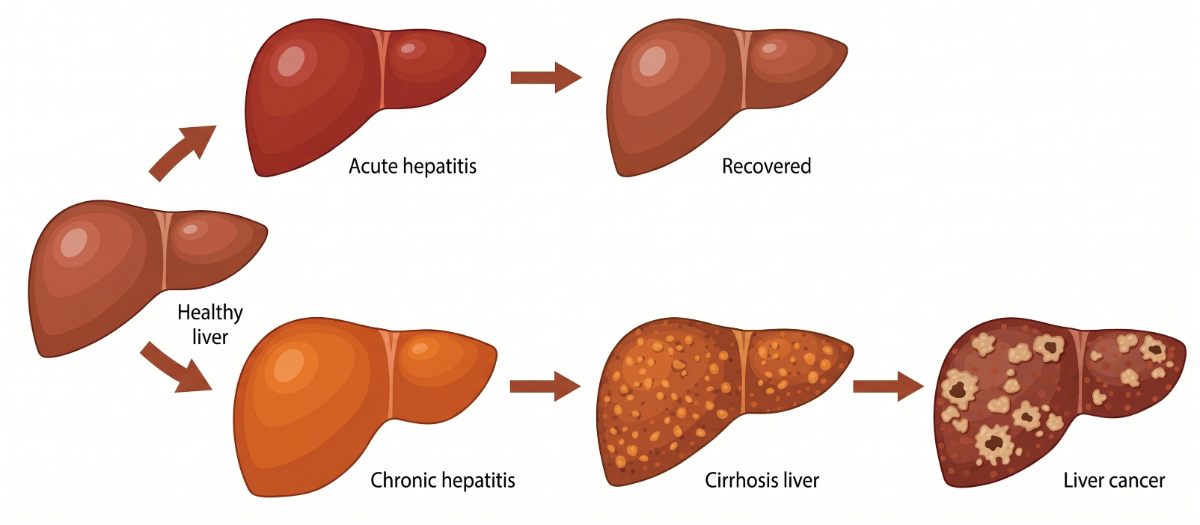
Hepatitis B virus, or HBV, remains one of the deadliest viral pathogens worldwide. It infects the liver and can cause cirrhosis, liver failure, and liver cancer. Globally, more than 250 million people are living with chronic HBV infection, and the virus causes approximately 1.1 million deaths each year. That is nearly 3,000 deaths every day, or about one death every 30 seconds. Because HBV is vaccine-preventable, in countries with strong vaccination programs and public-health infrastructure, HBV is much better controlled. However, access to newborn vaccination, screening, diagnosis, and treatment remains uneven worldwide.
HBV is transmitted through blood and body fluids, including mother-to-child transmission at birth, intimate contact, unsafe injections, needle sharing, and healthcare-associated exposure when infection-control practices fail. One of the most serious features of HBV is that the outcome depends strongly on the age at infection. Most healthy adults who become infected can clear the virus. In contrast, nearly 90% of infants infected at birth will develop chronic infection.
For those with chronic infection, current treatments can reduce viral load and the risk of liver disease, but they are seldom curative. Therefore, even with an effective vaccine, there is an urgent need for improved therapeutics. Dr. Wang’s lab focuses on understanding and curing HBV using a structural biology approach.
The Challenge and Promise of Structural Biology for HBV
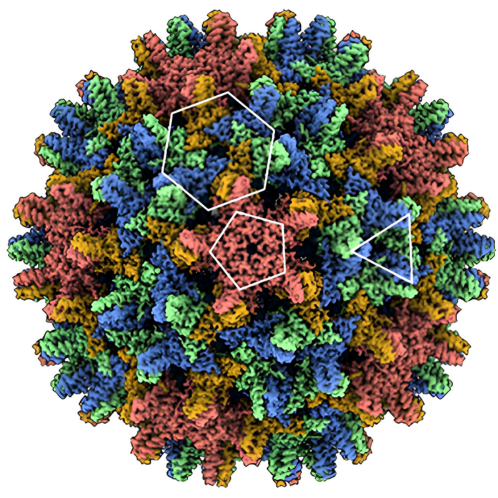
HBV is an enveloped DNA virus, meaning that the virus particle has an outer membrane layer and an internal protein shell, called the capsid, that protects the viral genome. During infection, HBV enters the cell and delivers its viral DNA to the nucleus. Once there, the stable viral DNA can persist as a long-lived template for producing new viral RNA and proteins, which is a key reason chronic HBV is so difficult to cure.
A particularly fascinating feature of HBV is how its genome matures. Though classified as a DNA virus, it first produces a viral RNA intermediate, called pregenomic RNA, by transcribing viral DNA in the nucleus. This pregenomic RNA is then packaged into newly assembled capsids in the cytoplasm where its reverse transcribed into DNA. This is different from other retroviruses, such as HIV, where reverse transcription occurs after entry into a new target cell. For HBV, genome maturation happens within the protective capsid, and only mature capsids are selected to interact with the viral envelope and be secreted as new infectious particles.
The lab’s research focuses on the distinct structural transitions experienced by an HBV virus particle over the course of its life. To study these steps, they produce and purify HBV particles, capsids, and related viral complexes from cell-based systems and use structural biology approaches to visualize them at different stages. Through these molecular snapshots, they hope to identify viral processes that can be therapeutically targeted more effectively.
Beyond therapy, their work also addresses basic questions in virology. HBV is a remarkable example of how a virus uses a small set of proteins to build a highly organized, infectious particle. By studying HBV structure at different stages of replication, they can determine general principles of virus assembly and behavior that apply more broadly.
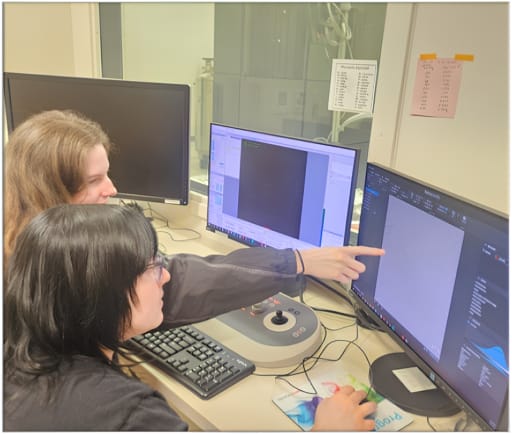
Cryo-EM is central to the lab’s work because HBV is dynamic, heterogeneous, and difficult to capture in only one structural state. Purified solutions often contain a mixture of assembly intermediates, immature capsids, mature capsids, and enveloped virions. This makes HBV challenging for methods such as crystallography, where sample uniformity and stability are often required. Cryo-EM allows Dr. Wang’s group to visualize viral particles in close proximity to their native state and then use computational methods to separate heterogeneous samples into distinct structural subpopulations. They also use mutations or experimental conditions to enrich or arrest capsids at specific stages of the viral life cycle, and cryo-electron tomography (cryo-ET) to examine viruses and viral structures inside cells.
The GraVitri Manual Plunge Cooler: An Ideal Instrument for Studying Viruses
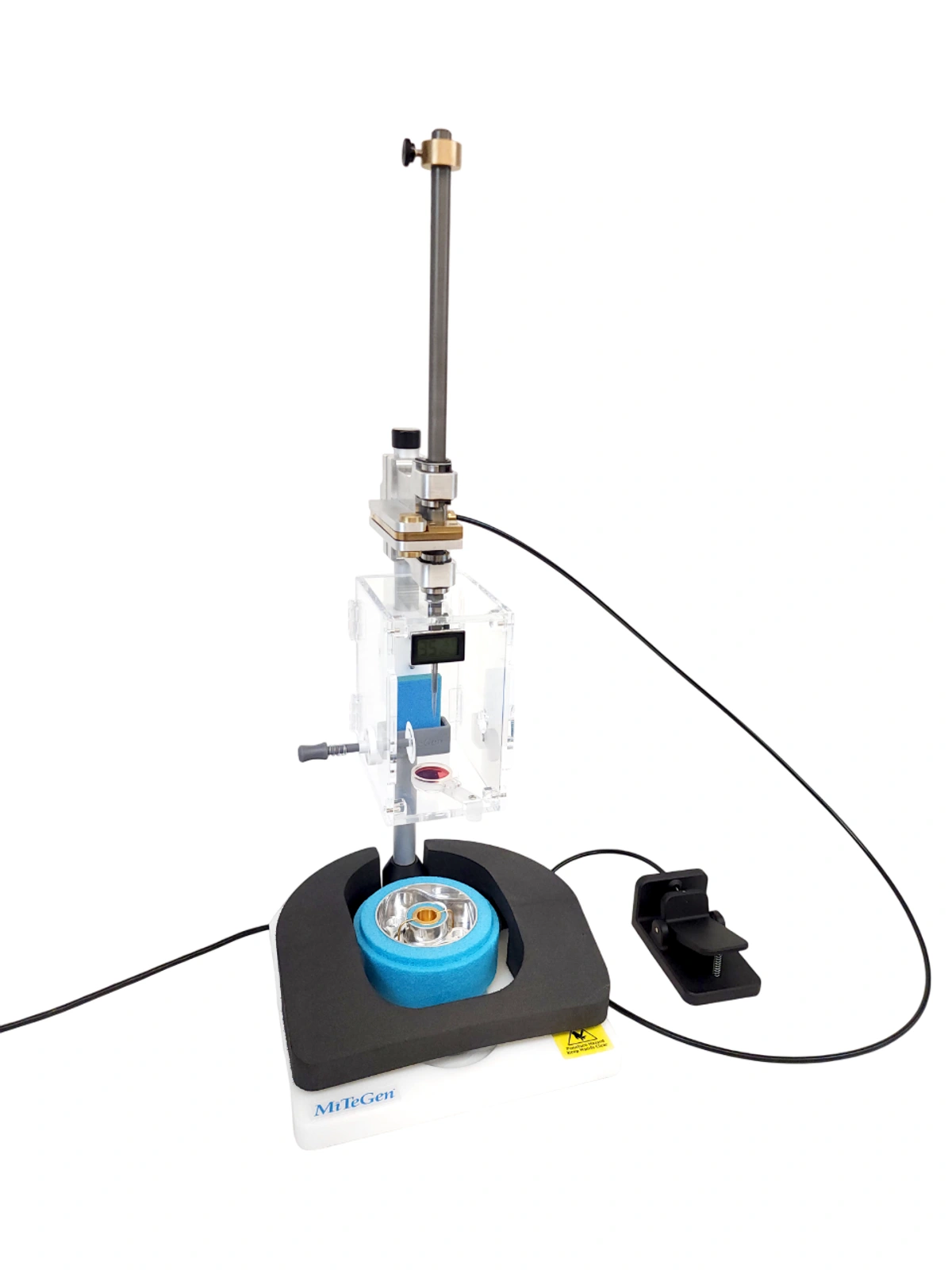
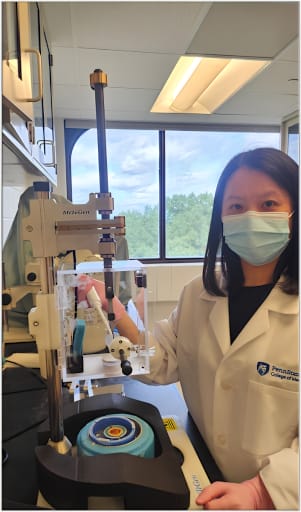
Sample preparation is one of the most important and difficult parts of this work. Although the lab has access to automated vitrification devices, a GraVitri manual plunge cooler offers control that is especially valuable for low-abundance and cell-based samples. Because they work with mammalian cell systems, virus yield is often limited, and they sometimes need to apply and blot the sample multiple times to increase the number of particles on a grid. For cells grown directly on EM grids, manual blotting also allows them to remove solution from the backside of the grid while visually monitoring when the grid is ready to plunge. This makes the process adaptable for samples that do not behave well with a fixed, automated protocol. Overall, the biggest advantages of the GraVitri manual plunge cooler are flexibility, visual control, and compatibility with low-abundance or non-standard samples.
The biggest challenges in preparing viral samples are limited yield, heterogeneity, aggregation, particle damage at the air-water interface, preferred orientation, and ice thickness. These issues are addressed by optimizing purification, grid type, blotting conditions, sample concentration, additives when appropriate, and freezing strategy. Even then, preparing high-quality grids from heterogeneous viral samples remains one of the hardest parts of the work.
New Discoveries Pave the Way for Improved HBV Therapy
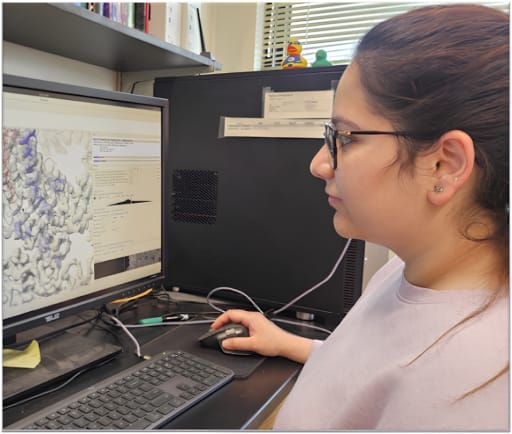
Dr. Wang’s group has generated new structural insight into how HBV particles are built, stabilized, and matured. One major area of their work focuses on the capsid. They found that HBV capsids produced in human cells contain small lipid-associated densities at specific sites inside the capsid. These lipids appear to stabilize the capsid structure and may help explain how the virus remains stable enough to survive outside the cell yet responsive to the right cellular conditions during infection. This provides a new way to think about the HBV particle, not as a rigid container, but as a dynamic structure whose stability is tuned by both viral proteins and host-derived molecules.
They have also studied how viral DNA is organized inside mature capsids. Their work suggests that the HBV genome is not randomly packed. Instead, the DNA can adopt an ordered, spring-loaded conformation inside the capsid. This may help explain how the mature viral genome is primed for release during infection.
A major ongoing direction in the lab is to understand how antiviral compounds, especially capsid assembly modulators, change HBV structure and replication. These small molecules alter capsid assembly or maturation, and structural information can help explain why some compounds work better than others. In the long term, this knowledge may help guide the design of drugs that more effectively block virus production or, in some settings, push infected cells toward elimination.
HBV Eradication Requires Widespread Cooperation
Dr. Wang’s lab’s work has benefited from collaborations with other virologists, structural biologists, and HBV experts, including colleagues who study viral capsid assembly, antiviral compounds, and HBV replication. Moving forward, the lab is particularly interested in connecting with researchers with expertise in proteomics, mass spectrometry, host-cell signaling, viral replication pathways, and clinical HBV biology.
A dramatic decline in HBV disease burden will require extensive cross-disciplinary collaboration: broader vaccination coverage, improved screening and diagnosis, better access to antiviral treatment, reduced stigma and greater public awareness, and, ultimately, curative therapies for people who are already chronically infected. Dr. Wang’s lab hopes to contribute by defining, at the molecular level, how HBV assembles itself, protects its genome, releases it, and responds to antiviral pressure.
Interested in how MiTeGen cryoEM tools can advance your research?